
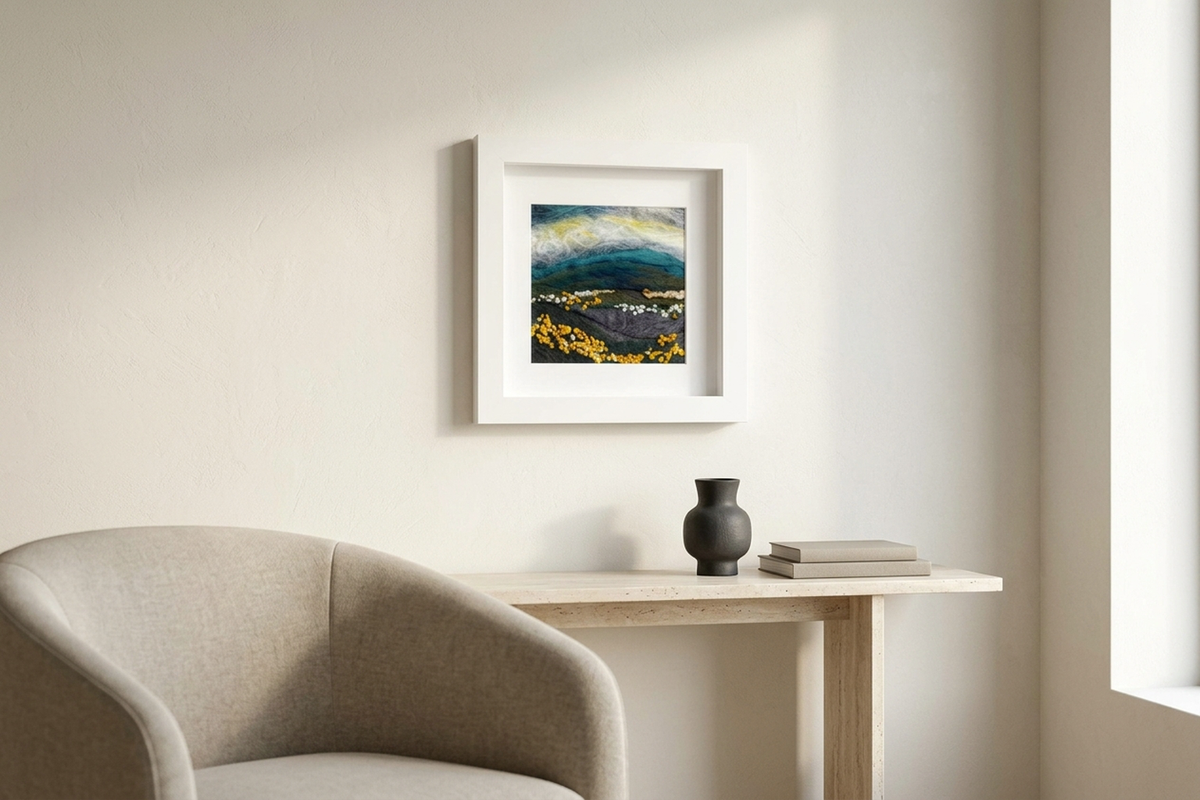
A room can feel different without replacing everything in it. Moving a chair, clearing a shelf or changing the position of one artwork can shift where your attention lands. Starting with a single piece gives the process a clear focus and makes it easier to judge each small change.
Felt artwork from fiafibreartstore includes Irish landscape and seascape subjects that can be considered alongside the everyday objects already in a room. The purpose is not to reproduce the scene throughout the decor. It is to find an arrangement in which the artwork and the space feel comfortable together.
Look before moving things
Stand at the room's entrance and notice what catches your eye first. Then sit where you normally spend time and look again. These two views may be quite different. A wall that feels prominent from the doorway may barely enter your view when you are reading or talking.
Take a simple photograph from each position if that helps you compare. Look for crowded areas, empty sections and objects that compete for attention. The photograph is a planning aid rather than a standard the finished room must meet; your experience of being in the room matters more.
Choose one focal relationship
Decide which relationship you want to explore first: artwork above a console, beside a reading chair or near an existing group of objects. Work on that small area before rearranging the rest of the room. Changing too many things at once makes it difficult to tell what has helped.
Confirm the artwork's dimensions and display requirements before trying a new position. A paper template based on verified outside measurements can help you compare locations. Consider the full frame and the space around it, rather than only the visible image.
Edit the surrounding objects
Remove nearby decorative objects temporarily and look at the artwork on its own. Then bring back only the items you still want there. A useful arrangement might contain fewer objects than before, or it might simply place them farther apart.
Varying the spacing can be more effective than adding something new. If every object sits at a similar height or very close together, try creating a clearer gap beside the artwork. Let your eye settle before deciding whether the area needs another element.
Consider colour without matching everything
Look at the actual product photograph or the artwork itself when considering nearby colours. You might connect it to one existing textile or object, but there is no need to repeat every visible tone. Neutral surroundings can also provide a coherent setting.
Avoid choosing additional decor solely from a product title. A name can suggest a mood without specifying the exact colours you will see. Your room's light and the materials already in it are more useful guides than an imagined palette based on words alone.
Revisit the arrangement through the day
Daylight changes how a room and its contents appear. Look at the proposed position in the morning and later in the day, while avoiding direct sunlight on textile artwork. Check whether reflections, nearby shadows or competing light sources make viewing less comfortable.
Give yourself time to live with a simple arrangement before making further changes. You may find that clearing the surrounding space was enough, or that moving a nearby lamp improves the view from your usual seat.
A refresh works best when it supports the way you use the room. Keep the artwork visible from a place you enjoy, leave enough space to appreciate it, and allow the surrounding objects to serve everyday life. One considered change can be a useful beginning.